
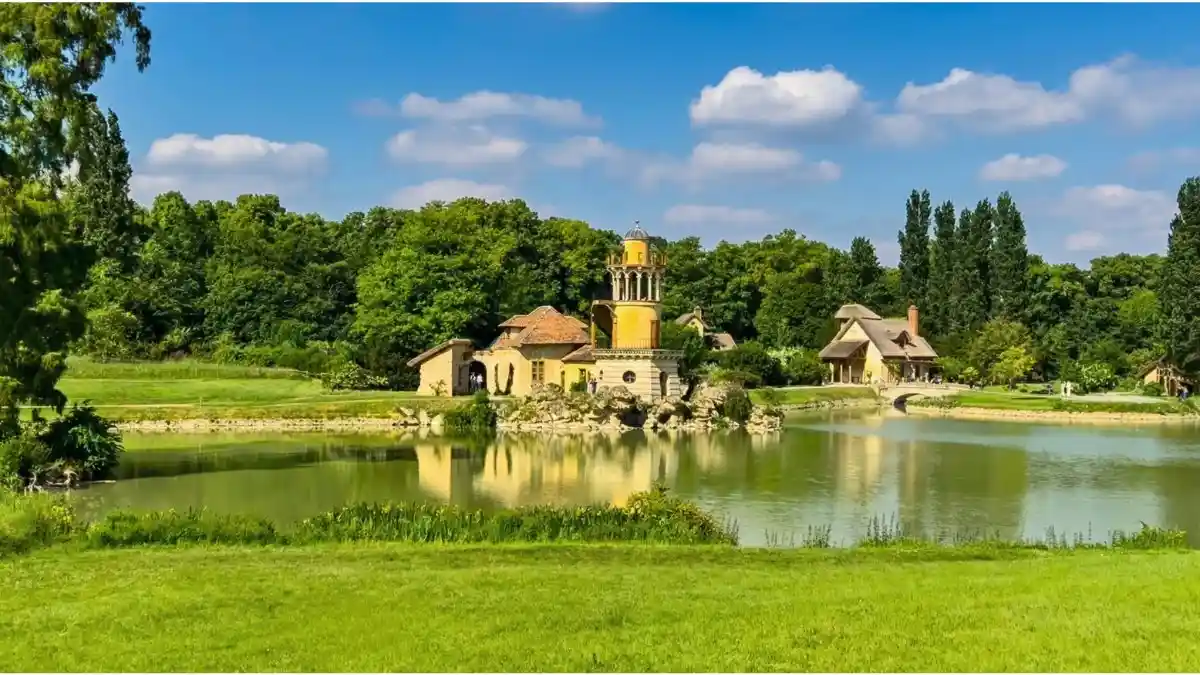
The crisp wind bites at your cheeks, carrying a heavy, soothing scent of damp grass, woodsmoke, and wild blooms. The coarse texture of the oak fencing beneath your fingertips forms a gloriously absurd contrast to the blinding gold you fully expected to be staring at for the last hour. You have just stepped onto damp earth. A sheep is bleating less than five metres away. The relentless, hypnotic churning of a wooden water wheel crushes any lingering hum of big-city noise.
Blink. Take a deep breath. Look around.
You are standing on the most luxurious estate in all of France. Yet, somehow, you appear to have been magically teleported to a sleepy, forgotten farming village deep in the Normandy countryside.
Welcome to the Hameau de la Reine (The Queen’s Hamlet).
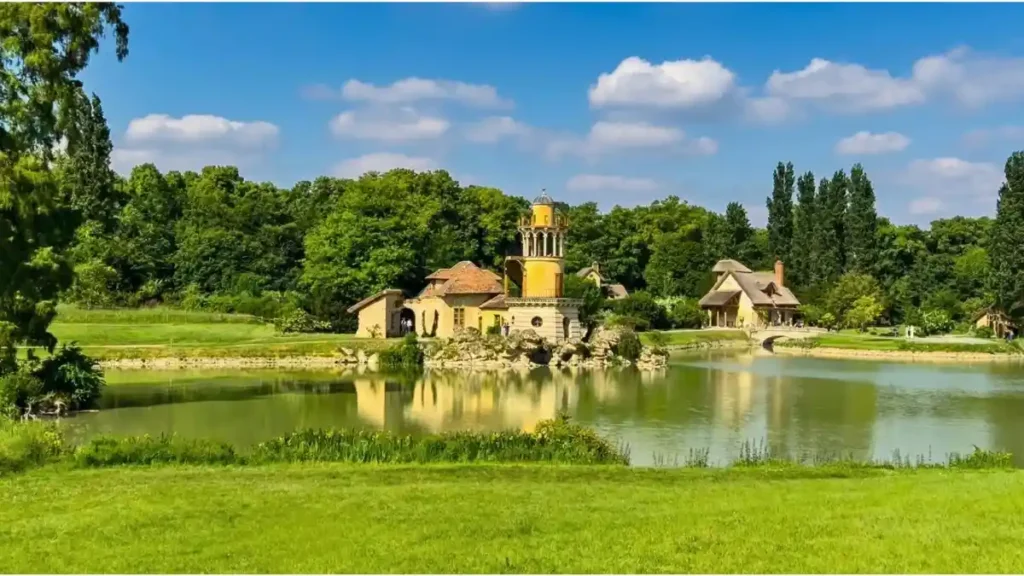
Leave the crushing crowds and the blinding gold behind! The Hameau de la Reine is the authentic, rustic refuge of Versailles. Hire a bicycle, pack a glorious picnic, and plunge headfirst into Marie Antoinette’s bucolic fairy tale beneath the golden sun.
While 95% of tourists are presently squashed together, sweating through their shirts and fighting tooth and nail for a blurry, rushed photograph in the Hall of Mirrors at the main Palace of Versailles, you have made a staggeringly smarter choice. You ventured through the woodlands to uncover a pastoral fever dream, arguably the greatest architectural escapism ever commissioned by Marie Antoinette.
This is not a dry, dusty article rattling off boring dates or ceiling decorations. Consider this your treasure map to absolute, unadulterated wonder. The Hameau is not merely an “annex garden.” It is the fascinating epicentre of the psychology belonging to history’s most iconic queen. It is a space meticulously designed, down to the last pebble, to exist as a living, breathing oil painting.
This was the sanctuary where royalty quite literally kicked off their heels to breathe fresh air. Here, they chased a curated simplicity heavily inspired by the philosophy of Jean-Jacques Rousseau. They found absolute peace far away from the relentless, toxic gossip of the royal court.
Prepare to fall hopelessly in love. The true charm of Versailles does not glitter with gold leaf. It smells of real life.
The Psychology of the Refuge: Why Did Marie Antoinette Build This?
To truly grasp the soul of this place, we must wind the clock back. Try to put yourself in the delicate satin shoes of a young Austrian girl, unceremoniously dumped into a foreign court absolutely suffocating under rigid rules, relentless etiquette, and aggressively judgmental eyes in every corridor. Versailles was a spectacular, gilded cage. The Hameau de la Reine was the key she personally forged to escape it.
The Queen was thoroughly exhausted by grandeur.
She desperately craved the illusion of a normal life. Thus, she hired the architectural genius Richard Mique in 1783 to erect an authentic peasant village from scratch. The level of detail bordered on sheer obsession. The exterior timbers of the facades were painted and chemically treated to look old, weathered, and heavily worm-eaten on the very day they opened. Fake cracks were painstakingly painted onto the stucco walls. The entire charade was orchestrated to create the heavy atmosphere of a rural village that had supposedly stood there for centuries.
The true genius lived in the contrast.
On the outside, you have a rustic, humble aesthetic that instantly calms the eye. Step inside, however, and these “shacks” hid outrageously luxurious interiors. We are talking imported marble fireplaces and furniture upholstered in the most eye-wateringly expensive silks from Lyon. It was the ultimate 18th-century cosplay. A wild utopia where the Queen and her closest ladies-in-waiting could shrug off their heavy corsets, slip into light, white cotton muslin dresses, collect freshly laid eggs, and pretend that the explosive political tensions of pre-revolutionary France were not rapidly boiling over just beyond the wrought-iron gates.
And do you want to know the very best part?
Walking through those grounds today allows you to feel that exact same paradigm shift. The abrupt transition from heavy Baroque opulence to almost wild, untamed bucolicism is an absolute breath of fresh air for the soul of any modern traveller.
Radar 2026: What Changed in the Trianon Estate and the Pass Tactic
The logistical landscape of Versailles has evolved rapidly. Drawing upon my extensive background in designing complex logistical solutions and optimising European travel routes, I can guarantee you this: mastering these rules is the difference between an exhausting nightmare and a brilliant, flawless day out. Intelligent travel demands anticipation.
1. The Dictatorship of the Timetable and the Victory of the Paris Museum Pass
Countless travellers confidently arrive with the Paris Museum Pass in their pocket, smugly assuming they hold the golden ticket for free, immediate access anywhere. Yes, the pass is fully accepted at the Trianon Estate, which encompasses the Petit Trianon and the Hameau de la Reine! It is a fantastic money-saver and a massive relief for your travel budget.
But there is a crucial, game-changing catch.
The golden rule is now brutally clear: having the physical or digital pass does not exempt you from booking a time slot. If you simply swagger up to the turnstile flashing your card with a grin, the security guard will politely return the smile and point you firmly to the back of the virtual queue. You absolutely must log onto the official website, select the “Billet Gratuit” (free ticket) option, and link it to your pass well in advance. Glide through the gates like someone who truly owns the system.
2. The Hidden Toll of the Gardens (The Fine Print)
Here is the secret that saves unsuspecting wallets from a nasty shock. On the days of the fountain shows (the famous Grandes Eaux Musicales or Jardins Musicaux, which run on weekends and certain Tuesdays and Fridays during the high season), the massive, geometric gardens linking the Main Palace to the Trianon complex suddenly transform into a paid zone.
And the Paris Museum Pass DOES NOT cover this specific garden fee.
If you attempt to casually stroll through the greenery, you will abruptly hit a barrier and be forced to cough up an extra 10 to 12 euros purely to walk across the grass.
The brilliant tactical move?
Bypass the gardens entirely by walking along the gorgeous, tree-lined avenues of the town of Versailles itself, heading straight for the side gates. Alternatively, simply time your visit for a day when there is no musical spectacle. You guarantee zero extra costs, dodge the massive crowds, and keep your itinerary perfectly under budget.
3. Independent Turnstiles For Those Who Know What They Want
Have you already decided you couldn’t care less about seeing the Main Palace and you don’t possess a Museum Pass? Splendid choice. Simply purchase the standalone Domaine de Trianon ticket. It costs less than half the price of the full passport.
Best of all, it allows you to enter directly through the Saint-Antoine Gate or the Porte de la Reine. Less queuing. Less stress. More time smiling at windmills.
The B-Side: Logistical Traps (And How to Outsmart Them)
Versailles is visually staggering. However, the physical walking can become a brutal athletic challenge if you fail to map your route mentally beforehand. That innocent-looking paper map handed out at the entrance makes the Hameau de la Reine look like it is “just around the corner, past that cute little pond.”
Pure optical illusion.
It is a mammoth trek of nearly 3 kilometres from the Main Palace, often under a baking summer sun, crunching along white gravel that mercilessly reflects the glare straight into your retinas.
The Siren Song of the Golf Cart
Realising the colossal distance, tourists—already battered from fighting for breathing space inside the palace—descend into panic. They sprint to hire those infamous electric golf carts. They cost a small fortune, hitting nearly 40 euros an hour.
The monumental catch that nobody bothers to read in the contract?
They are strictly forbidden from entering the Hameau de la Reine area.
You pay a premium, drive to the edge of the estate, have to abandon the cart far away anyway, and the ruthless clock keeps eating your precious euros while you stroll through the village on foot. It is the absolute definition of setting money on fire in France.
Tactical Optimism and the Charming Solution
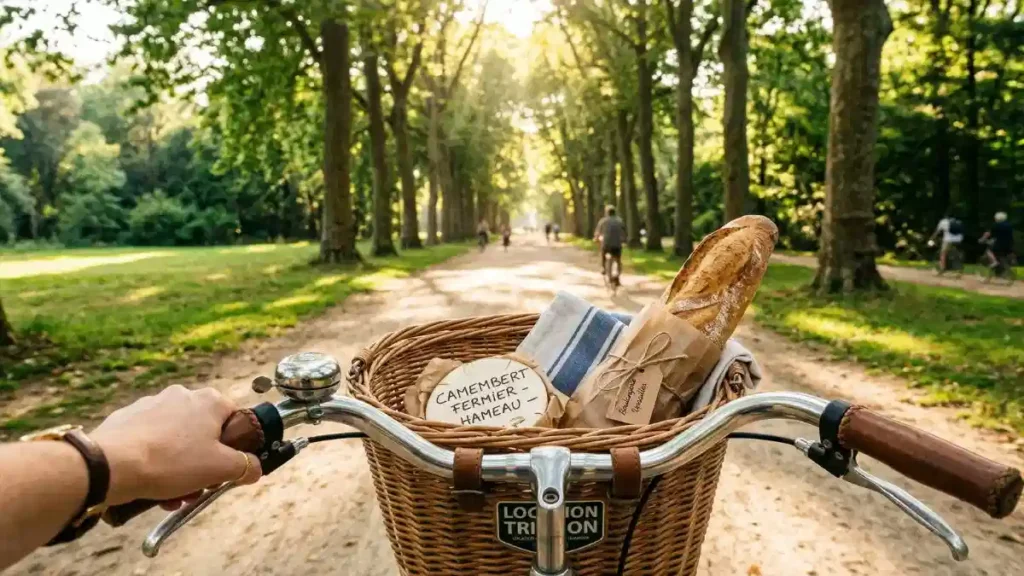
Lean into timeless elegance and protect your wallet. Head down to the edges of the massive Grand Canal and hire a bicycle for a tiny fraction of that exorbitant cost.
The sensation is genuinely indescribable.
Pedalling under rows of ancient, towering trees. Feeling the crisp afternoon breeze hitting your face. Hearing the satisfying crunch of your bicycle tyres rolling over dry autumn leaves. It is immensely liberating. You transform what would have been a sweaty, tiring march into a joyful ride straight out of a classic European film, absolutely oozing high energy. You smoothly park at the entrance of the Petit Trianon, lock the bike up, and stroll into the Queen’s village feeling light, incredibly happy, and with plenty of cash left in your pocket.
Forget the grossly overpriced electric carts! Hiring a vintage bicycle and bringing your own picnic is the absolute masterstroke for arriving at the Hameau de la Reine exuding charm and guarding your budget fiercely.
The Hunt for the Perfect (And Economical) Picnic
The food sold inside the castle complex is, to be brutally honest with you, designed for the lazy tourist who hasn’t done their research and will accept anything when starvation kicks in. We are talking about dry, plastic-wrapped, highly inflated sandwiches that deliver remarkably little flavour and a massive serving of disappointment.
Your guerrilla tactic to eat like royalty for pennies?
Stop at an authentic, family-run boulangerie in the charming town centre of Versailles before you cross the golden gates. Greet the baker with a booming, cheerful “Bonjour!”. Order a ‘baguette de tradition’ that is still warm and aggressively crusty. Buy a generous, wildly creamy wedge of Brie cheese, some ridiculously sweet cherry tomatoes from the local market, and a heavy bunch of fresh grapes.
Setting up an impromptu picnic on the soft, permitted lawns surrounding the Grand Canal, gazing at the tranquil waters before entering Marie Antoinette’s domain, is the absolute pinnacle of intelligent tourism. It is chic. It is delicious. It is a deep, gorgeous dive into everyday French culture.
Anatomy of a Fairy Tale: What You Will See and Feel
The Hameau de la Reine is not a lifeless, plastic film set dumped in a theme park. It is a living, breathing ecosystem. A staggering triumph of landscaping that immediately elevates the spirit of anyone who sets foot there. Let us take a walk through it right now.
The Mill (Le Moulin)
As you round the gentle curves of the Great Lake, it suddenly appears, mirrored majestically in the water. A perfectly functional water mill.
This is the absolute energetic high point and the undisputed postcard image of the peasant village. The rhythmic, deep, and constant thud of the water smashing against the heavy wooden blades possesses an immediate, magical power to dissolve any tension sitting in your shoulders. The sunlight bounces off the glassy water so perfectly that any hasty snap taken on your phone instantly looks like the cover of an award-winning travel magazine.
Stand there. Close your eyes for thirty seconds and just listen to it. It is outdoor therapy.
The Boudoir and the Queen’s House (La Maison de la Reine)
In the heart of the complex, you will stumble upon two enchanting houses, seamlessly linked by a rustic wooden gallery violently dripping with vibrant green climbing vines, flanked by hand-painted faience pots.
The design here is a masterclass in neuro-architecture centuries before the term even existed in the modern vocabulary.
Outside, you have rough thatched roofs, purposefully chipped walls, and a wooden staircase that looks as though it might groan if you simply stare at it. The entire objective was to soothe the saturated, exhausted eyes of the court. Inside (where only the Queen’s absolute inner circle were permitted), they hid fiercely heated salons, velvet luxury, immaculate porcelain, and a vibrant billiard room where Marie Antoinette threw her head back in laughter, played games, and completely forgot the suffocating weight of the crown.
The Marlborough Tower (La Tour de Marlborough)
Standing proudly near the water’s edge, this squat, circular tower with its charming wooden balcony served as a highly strategic observation point. It was also the exact launch pad for the Queen’s twilight boating trips on the lake.
It lends a beautifully scenic, dramatic verticality to the area.
You can almost shut your eyes and vividly picture the royal musicians gently playing violins at the top of the tower, while the court, dressed as obscenely wealthy peasants, fished for fat carp in the fading light of a European summer evening. It is pure architectural poetry.
The Preparation Dairy (La Laiterie de Propreté)
This is precisely where the hamlet entirely stole my heart with its sheer, unadulterated eccentricity.
A royal dairy. It sounds like a punchline, but they were deadly serious. Here, the desperate hunt for the bucolic violently collided with unrestrained luxury. The milking buckets were not made of splintered old wood; they were custom-crafted from the purest, finest Sèvres porcelain. The cows and goats in the herd, imported directly from the Swiss mountains, were vigorously washed, brushed, and decorated with colourful silk ribbons before the Queen even arrived.
Marie Antoinette would waltz in here, into a room fitted with heavy white marble benches designed specifically to keep the room naturally icy cold, to churn butter and taste fresh cream. It was playing at farming, absolutely, but it was a game that produced massive, genuine smiles and moments of pure, unfiltered lightness that she simply could not locate in the terrifying corridors of the palace.
The Sensory Wealth of the Gardens and Cultivated Allotments
Do not simply stare at the buildings. Look down at the earth. The soil of the Hameau is spectacularly alive.
Tucked behind the structures, perfectly aligned vegetable patches stretch out, bursting with gigantic cabbages, spiky artichokes, bright orange pumpkins, and aromatic herbs that heavily perfume the air with every passing gust of wind. The botanical care is jaw-dropping. You walk past and physically inhale the sharp scent of lavender aggressively mingling with the wet earth.
The apple tree standing quietly in the corner is not merely for decoration; it produces real fruit, fiercely protected and cultivated by the calloused, careful hands of today’s master gardeners, who keep this tradition alive with a palpable love for their craft. Value the silent, brilliant work of these people keeping this time machine running. It is breathtaking.
Immersive Video: Walk Before You Fly
To ensure you perfectly comprehend the sheer magnitude of what I am describing, I need you to watch this brilliant footage I have dug up for you.
Scenario Engineering: Your “If/Then” Action Plan
To travel freely, without borders and entirely without fear, you must be mentally bulletproofed against any sudden surprises. Here is your tactical manual:
Scenario 1: What if the heavens suddenly open? The Hameau de la Reine is an experience that is 90% outdoors. The Magic Plan: Smile at the sky. Rain in France is never a problem; it is a completely free cinematic filter. Always carry a light, stylish rain mac in your bag (umbrellas are completely useless with the open winds out here). The moisture violently saturates the colours of the thatched roofs, making the green grass explode in your vision. The smell of wet earth becomes intensely intoxicating. If the downpour gets truly aggressive, simply walk calmly back a few steps to the Petit Trianon, which is entirely covered, wildly luxurious, and wait for the storm to pass while exploring the intimate salons of the monarchy.
Scenario 2: What if I have a measly 4 hours in total at Versailles? The Elite Route: Skip the Main Palace. Do it without a single ounce of guilt. Trust me on this. Use your Paris Museum Pass (with the time slot booked!) or buy the standalone ticket. Catch the comfortable train to Versailles Rive Droite station, walk enthusiastically through the charming streets of the town to the Porte de la Reine, and dive straight, with zero detours, into the Trianons and the Hameau. You will secure the most serene, poetic, deep, and exclusive experience on the entire estate, without wasting a single gram of energy physically shoving through hordes of sweaty tourists.
Scenario 3: What if the travel budget is sitting at absolute zero? The Ninja Plan: Rigorously plan your trip to be there on the first Sunday of the month (only during the European winter months, between November and March). Why? On those specific days, entry to the entire monumental complex of Versailles, including the Queen’s intimate refuge, is 100% free! Yes, completely gratis. It demands a healthy dose of patience because the natural demand is higher, but the glorious reward of strolling through one of the most incredible UNESCO heritage sites in the world, without taking a single euro out of your wallet, possesses a sweet, unmatched flavour. To get there from the heart of Paris spending the bare minimum, the RER C train line is your fastest, most super-efficient best friend.
The Importance of Preservation and Our Role
Visiting the Hameau de la Reine is not merely consuming a tourist product. It is bearing witness to an absolute miracle of historical preservation. Keeping these wooden houses standing, the windmills turning, and the vegetable patches blooming requires a colossal, relentless daily effort from the Château de Versailles, which dedicates entire armies of restorers, architects, and biologists to keeping this 18th-century dream alive.
When we buy our ticket, stick strictly to the marked paths without crushing the centuries-old roots, and pack all of our picnic rubbish away with us, we are actively funding and helping to shield this priceless cultural heritage for the next generation of dreamers. Conscious tourism is the undisputed key to the future of travel.
The Sensory Verdict: High Energy and Unfiltered
Standing in the Hameau de la Reine at the end of the day is the exact kind of transformative moment you will be loudly recounting to your friends at dinner parties for the next ten years.
When the sun finally begins to dip low on the horizon, the golden light paints the rough stone walls and the rustic roofs with a colour so intensely warm and alive that it feels as though it is physically hugging your eyes. It is the perfect, flawless twilight.
Run your hand along the wooden fences as you walk.
Listen to the sharp, deeply satisfying crunch of the white gravel gently sinking beneath the soles of your comfortable shoes. Feel the brutal, almost palpable shift in the atmosphere: you leave behind the geometric, stressful, brutally symmetrical rigour of the main palace in the distance, to plunge headfirst into the charming, organic, perfumed, and immensely free chaos of this secret village.
It is an absolute masterclass in spatial psychology.
The beauty of the Hameau is undeniable. But knowing that you were smart, that you mapped your route perfectly, that you elegantly dodged the worst of the queues, that you didn’t burn your cash on an overpriced electric cart, and that you savoured your own phenomenal picnic on the banks of that silver water… my word, that makes absolutely everything taste so much sweeter and more rewarding.
The Queen’s Hamlet is incredibly far from being just another generic tourist trap to cross off your Paris obligation list. It is physical, earth-bound proof that the human hunt for nature, for peace of mind, and for authentic simplicity is genuinely capable of moving mountains—or, in the wildly eccentric case of Marie Antoinette, capable of moving entire national treasures.
Life is entirely too short to sit around looking at photos of incredible places on a cracked phone screen. The world is out there, absolutely bursting with sharp smells, rough textures, smiling faces, warm bread straight from the oven, and wooden windmills slowly turning in the heavy wind.
Pack a sturdy, comfortable bag. Lace up your absolute best walking trainers. Book that flight you have been putting off for months. Go with your mind blown wide open and a light heart to France. And when you are finally walking beneath the ancient trees of the Trianon, feel the wind violently on your face and remember: Versailles, with all its glory, its mud, and its poetry, is going to smile right back at you. We will see you on the road!
Ready to trade the smell of damp grass for the blinding glare of a thousand mirrors? Leave the bucolicism behind for a brief second and dive straight into the absolute, unfiltered ostentation of Louis XIV with our tactical guide to the Main Palace.
1 thought on “Hameau de la Reine – The Queen’s Perfect Escape”