
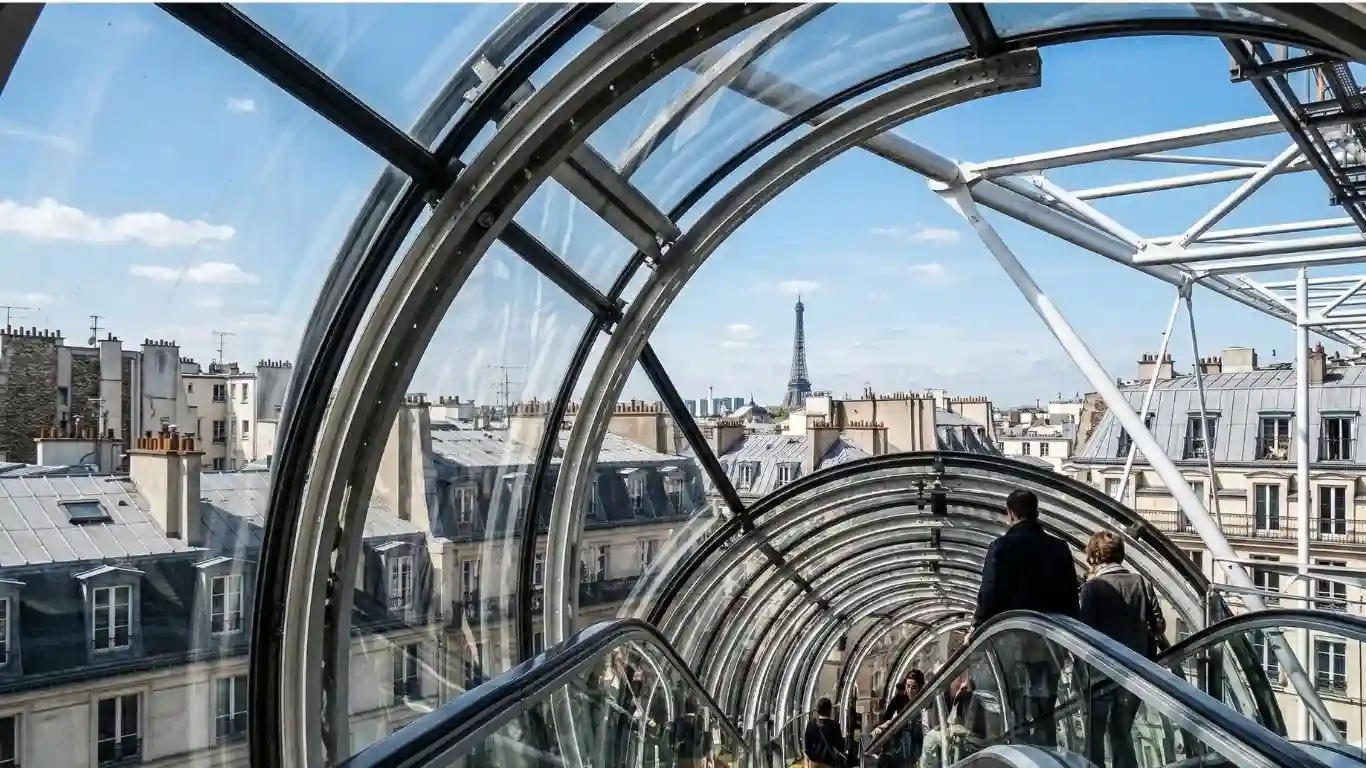
Have you ever had that marvellous moment where every single piece of the puzzle finally clicks into place? You are strolling through the winding, cobblestone alleys of Le Marais, the late afternoon sun casting a golden, honey-like glow over the limestone facades. You turn the corner of Rue Rambuteau, your heart racing with anticipation, expecting that sudden, brilliant clash of primary colours. But instead of the vibrant red and blue pipes of the Beaubourg, you are met with the rhythmic silence of cranes and a formidable wall of hoarding.
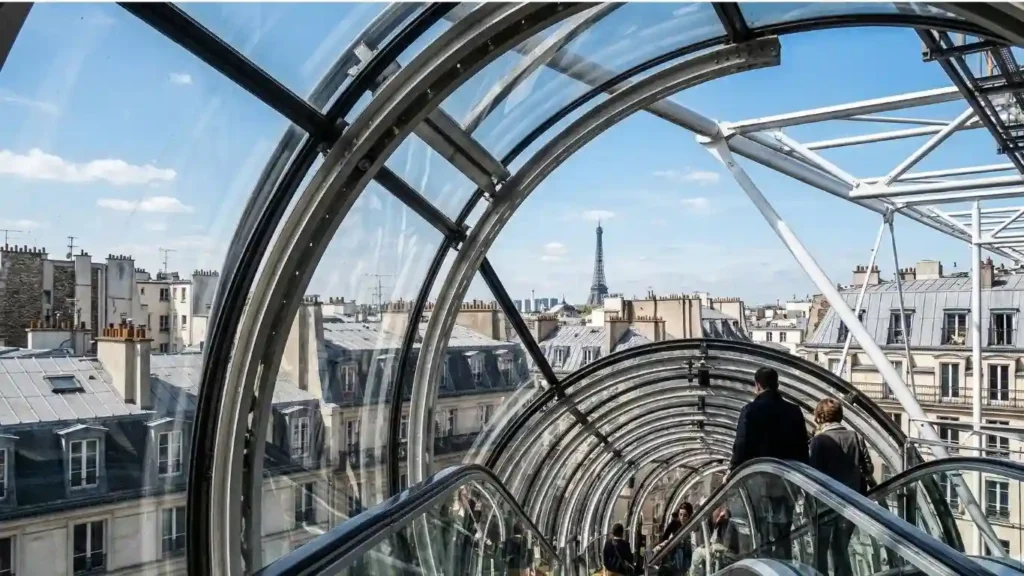
Let’s be perfectly honest: the first time I saw the Centre Pompidou closed, it felt like a tiny heartbreak. That iconic glass “caterpillar”—the escalator that looks like a transparent serpent ascending the sky—is perfectly still. The usual chaotic symphony of street performers on the Piazza has been replaced by the metallic echo of renovation.
But do you want to know the absolute best part?
Paris never truly stops; she simply reinvents her wardrobe. The closure of the Beaubourg is not a full stop; it is the exhilarating beginning of a cultural treasure hunt. This is your exclusive chance to see the city through a lens that most tourists will never even realise exists. The revolutionary contemporary art that once lived inside that steel skeleton has now spilled out into the streets, into hidden palaces, and even into charming satellite cities.
Having spent years exploring everywhere from the hidden corners of Europe to the vibrant streets of the Americas, I can honestly tell you: this is a stroke of luck. If you have a trip booked for 2026 and felt a pang of panic reading about the closure, take a deep, relaxing breath. I have mapped out exactly where the masterpieces have gone to hide. Prepare yourself, because your cultural journey in Paris has just become far more authentic, exclusive, and vibrant than any standard guidebook could ever promise. You are about to become a true Parisian insider.
Has the Heart Stopped? Why the Centre Pompidou Closure is a Gift
To truly appreciate the present, we must look into the guts of this high-tech giant. When Renzo Piano and Richard Rogers designed this museum in the 1970s, they weren’t just architects; they were rebels. They created a “living machine” that wore its innards on the outside—wires, pipes, and air-conditioning ducts were all proudly displayed for the world to see.
That raw honesty is exactly why the place won my heart years ago.
The vision was for the building to be a “culture machine.” However, even the most brilliant machines suffer when exposed to the elements for half a century. The Parisian winter is undeniably charming, but the acidic rain and urban pollution are relentless against steel and glass. The building was, quite frankly, exhausted.
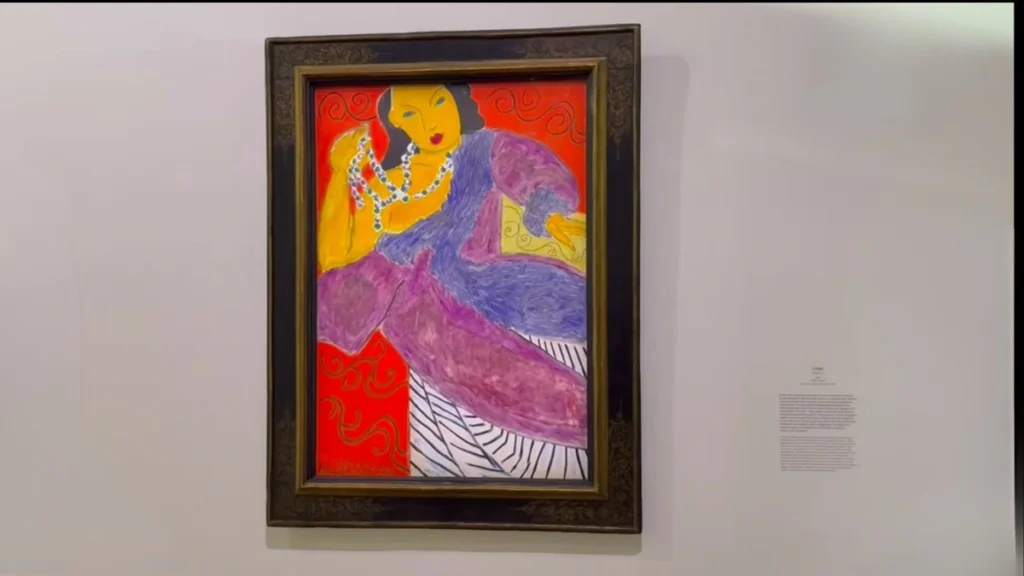
The French government made a bold, deeply optimistic decision: a “heart surgery” costing over 260 million euros. This investment ensures that by 2030, the Pompidou returns as the ultimate lighthouse of modernity. Until then, the spirit of Picasso, Matisse, and Kandinsky is more alive and mobile than ever. Think of it as the museum going on a grand world tour, and you have a front-row VIP seat to its most intimate performances.
Operation Constellation: Where the Masterpieces Live Now
The Pompidou collection is a true force of nature, boasting over 120,000 works—the largest of its kind in Europe. They were never going to lock these treasures in a dark basement while the jackhammers roared. Instead, they launched “Operation Constellation,” a brilliant plan to decentralise beauty.
Grand Palais: Where Luxury Meets the Avant-Garde
My absolute favourite spot to witness this transition is the Grand Palais. You know that monumental glass dome near the Champs-Élysées? It has recently emerged from its own stunning renovation and now serves as the temporary home for the Pompidou’s most prestigious exhibitions.
There is something genuinely magical about seeing sharp, colourful contemporary art under the natural, ethereal light of a 19th-century palace. The contrast between the ornate Belle Époque ironwork and the abstract canvases of the mid-20th century creates a breathtaking aesthetic tension that you simply couldn’t find in the original building. It is a one-off experience. If you are in Paris during 2026, the “heavyweights” of modern art are waiting for you here, surrounded by a level of grandeur that feels like a warm embrace. Just imagine the photos you will take with that light!
Centre Pompidou-Metz: The Golden Day Trip
If you want to escape the obvious and experience an authentic slice of France, you must board a high-speed TGV train at Gare de l’Est. In just 80 minutes, you arrive in the stunning city of Metz.
The Centre Pompidou-Metz is a masterpiece in its own right, featuring an undulating timber roof that looks like a giant, woven Chinese hat floating over the landscape. With the Paris headquarters closed, the most monumental installations—the ones requiring massive physical breathing room—have been moved here. It is the perfect excuse to spend a day indulging in the famous Macarons de Boulay, far from the frantic crowds of the Eiffel Tower. The air feels cleaner, the pace is slower, and the art feels incredibly impactful.
Fabrique de l’Art in Massy: A Backstage Secret
For the traveller who seeks true insider knowledge—the kind of detail that makes your stories better than everyone else’s at the dinner table—you need to know about Massy. Just south of Paris, the museum has opened the “Fabrique de l’Art.”
This isn’t just a high-security storage facility. It is a revolutionary space for preservation and restoration where you can actually witness the backstage magic of a world-class museum. It is raw, industrial, and fascinating to watch restorers working on pieces that will soon be touring the globe. You aren’t just a spectator; you are a witness to history being preserved.
Surviving Le Marais: Between Scaffolding and Flavours
Even with the main doors closed, you will find yourself drawn to Le Marais. It is inevitable and, quite honestly, essential. The neighbourhood remains the heartbeat of the city, brimming with the sincere smiles of local bakers and a restless, youthful energy.
But here is a piece of advice from someone who has learned the hard way: avoid the cafes that sit directly against the scaffolding on Rue Rambuteau. The noise of the works can easily shatter your perfect croissant moment.
Instead, walk two blocks deeper into the district towards Rue des Rosiers. Let your nose lead you to the scent of warm falafel at L’As du Fallafel. There, tucked between a boutique design shop and an independent art gallery, life happens organically. The local shopkeepers are still there, offering a sample of cheese or a quick tip on which street has the most spectacular light for your photos at 5:00 PM.
What enchants me most is the sheer resilience of the community. Even without the massive torrent of tourists, the surrounding squares, like Square Georges-Cain, have become sanctuaries for locals. It is the perfect spot for an impromptu picnic with a five-euro bottle of wine and some creamy Brie. Can you feel the breeze? That is the real Paris.
If the Pompidou is Closed, Where Do I Go? (If/Then Scenarios)
The secret to being a happy traveller is flexibility. Here is your ultimate contingency map to ensure you don’t miss a single beat:
- IF you adore the “raw” and industrial vibe of the Pompidou: Head straight to the Palais de Tokyo. It is the absolute antithesis of the Louvre. Imagine concrete walls, neon lights, and the most vanguard art you will ever encounter. It is vibrant, young, and exactly where “cool” Paris congregates.
- IF you want to see billionaire collections in historical buildings: The Bourse de Commerce (Pinault Collection) is your answer. A former circular grain market now housing a minimalist concrete cylinder designed by Tadao Ando. The architecture alone will leave you breathless.
- IF you miss the panoramic views from the Pompidou’s escalators: Climb to the rooftop terrace of Galeries Lafayette Haussmann. It is free to access, the atmosphere is always festive, and the view of the Opéra Garnier with the Eiffel Tower in the distance is truthfully even better than what the museum offered.
Sensorial Details: The Scent of Paris Under Renovation
It might sound unusual, but there is a profound beauty in this renovation. When you walk near the site, you catch the scent of cut metal mixing with the irresistible aroma of high-quality butter from the nearby boulangeries. It is Paris saying, “I am taking care of myself for you.”
I remember an elderly gentleman selling second-hand books at the bouquinistes near the Seine. He told me, with a twinkle in his eye: “The Pompidou is just taking a nap. When it wakes up, it will be a youth again.” This cultural resilience is what makes France so incredibly special. They celebrate the passage of time.
But the greatest secret is this: do not try to see everything. In this post-Beaubourg era, the golden rule is slowness. Sit on a bench in Place des Vosges, observe the children playing, and realise that art isn’t just inside the frames. It is in the design of the doorknobs, the way the waiter balances his tray, and the deep respect for life you see on every corner.
Field Execution: Organising Your 2026 Trip
To ensure a perfectly smooth journey, follow these technical steps:
- Check the Official Website: Before you leave your hotel, have a quick look at the Centre Pompidou site for their real-time interactive map of where artworks are located.
- Verify the Ministry of Culture: For the Grand Palais exhibitions, the French Ministry of Culture website is your ultimate authority.
- Trust Google Maps with Caution: Often, the map still lists the building as “Open” because of specific library events. Do not be fooled! The main galleries are strictly off-limits.
It was during this period of closure that I discovered my own heart for the city all over again. To make the most of the satellite exhibitions, always aim for the first time slot in the morning. Arrive 15 minutes before the doors open at the Grand Palais, and you will experience that sacred, uninterrupted silence in front of a Matisse that makes the whole trip worthwhile.
To truly understand the spectacular scale of what awaits you, watch this magnificent look at the restoration of the Grand Palais. It captures the incredible atmosphere perfectly.
Final Reflection: The Invitation
Paris is a feast that never ends; it simply moves to a different dining room. Having the Centre Pompidou closed is a brilliant invitation to stop looking only at the obvious and start exploring the edges.
So, stop delaying that dream. Picasso’s works are waiting for you in glass palaces, the wine is perfectly chilled, and the streets of Paris remain the absolute best backdrop for your own story.
Do you remember that flutter of excitement you get when you arrive somewhere new? Trust me: close this article, open a new tab, and start looking at flights. Paris, even under renovation, is always a magnificent idea.
When you finally get there, be sure to blow a kiss to the Seine for me. You won’t regret a single second of it!
See Other Possibilities:
1 thought on “The New Era of Parisian Art: Centre Pompidou Closed. What can I do?”