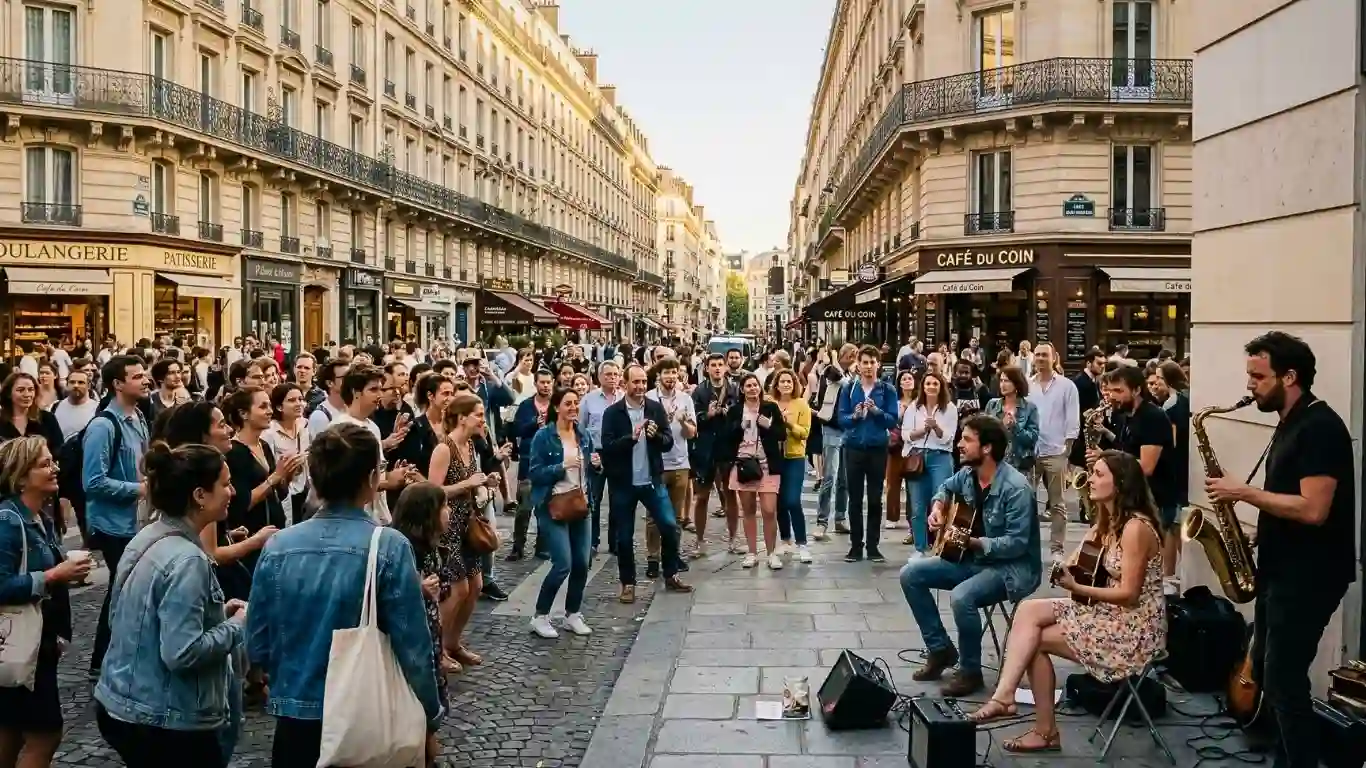
Are you planning a trip to France and wanting to experience something that goes way beyond the classic postcard sights? If you happen to be in the city on the 21st of June, brace yourself for the most vibrant event of the year. The Fête de la Musique in Paris transforms the French capital into a massive open-air stage.
On this day, which marks the summer solstice in the northern hemisphere, music takes over every street corner. It’s the perfect chance to see Parisians and tourists mingling, celebrating life in the streets, squares, and cafés. And the absolute best part: it’s a completely free event.
Whether you’re a fan of heavy rock, smooth jazz, or grand classical choirs, there’s a spot for you at this party. The city breathes art, and the energy is simply infectious. It’s the sort of travel memory that no photograph can ever fully capture.
In this comprehensive guide, I’m going to take you by the hand and show you exactly how to tackle this festival the smart way. We’ll uncover the best times to head out, the unmissable neighbourhoods, and the little secrets only those who have pounded the pavements there truly know.
How Did the Fête de la Musique Come About?
To understand the magic of this date, we need to go back in time a little. The idea wasn’t born out of massive event production companies, but rather a genuine desire to spread art. It was in 1982 that the French Ministry of Culture, spearheaded by Jack Lang, had a brilliant idea.
They realised that a lot of French people knew how to play an instrument but rarely performed in public. The goal, then, was to create a day where music was democratised to the absolute max. The original motto played on French words: “Faites de la musique” (Make music), which sounds exactly like the name of the festival.
From that moment on, amateur and professional musicians were given carte blanche to take over public spaces. It didn’t matter if it was a garage band or a seasoned violinist. Everyone was invited to step out of their homes and share their talent with anyone passing by.
Today, the event has grown so much that it has crossed France’s borders and is celebrated in dozens of countries. But, take my word for it, the atmosphere in Paris remains unbeatable and utterly unique in the world.
What to Expect on the 21st of June?
If you’ve never been to Europe during the summer, there’s a natural detail that changes everything: the sunlight. On the 21st of June, which happens to be the longest day of the year, the sun doesn’t set in Paris until around 10 pm. This means you’ll have hours upon hours of natural light to wander about and enjoy the music.
The party kicks off rather timidly in the afternoon, usually around 4 pm. Small groups start setting up their gear on the pavements, right in front of bakeries or little bistros. Children pour out of schools and stop to listen to the first notes echoing through the narrow streets.
As evening falls, the city changes its rhythm. The streets become packed with pedestrians, as car traffic is blocked off in several strategic areas. You’ll see people sitting on the pavements, sipping a glass of wine and just soaking up the moment with their mates.
By the way, have you ever imagined what it would be like to stumble upon a heavy rock gig just outside the Louvre and, right on the very next street, a super chilled-out jazz trio? That is the sheer magic of Paris on this day.
It’s organised chaos, typical of massive European celebrations. Security is stepped up, but the overall vibe is one of great peace, respect, and relaxation. It’s a moment when the city loosens its tie and throws on some comfortable clothes for a proper dance.
The Golden Rule: Go with the Flow
A lot of travellers arrive with rigid itineraries, wanting to see band X at 6 pm and choir Y at 7 pm. My honest advice? Chuck the itinerary out the window for a day. The absolute best way to experience the Fête de la Musique in Paris is to wander aimlessly.
Let your ears guide your footsteps. Sometimes, the best gig of your entire trip will be that unknown band you randomly stumbled across in a hidden little square. Surprise is the best seasoning for this event.
The Best Neighbourhoods to Enjoy the Party
Paris is massive, and choosing where to spend the evening can be a traveller’s biggest challenge. Every neighbourhood (or “arrondissement”, as they call them over there) has a very strong personality. And the music playing in each area perfectly reflects that vibe.
If you want to plan your route, I’ve handpicked the best spots for you to focus your energy on.
- Le Marais: The Youthful and Electronic Vibe
The Marais district is, historically, one of the trendiest in the city. With its narrow cobbled streets and medieval architecture, the contrast with modern music is cracking. Here, you’ll find heaps of electronic music, DJs spinning tunes from apartment windows, and a lot of Pop.
It’s the ideal spot if you fancy a dance and a full-on open-air clubbing atmosphere. The streets get incredibly busy, so be prepared to shuffle slowly through the crowds. Many pubs stick massive speakers by their doors and sell drinks to those out on the street.
- Montmartre: The Bohemian Hideaway
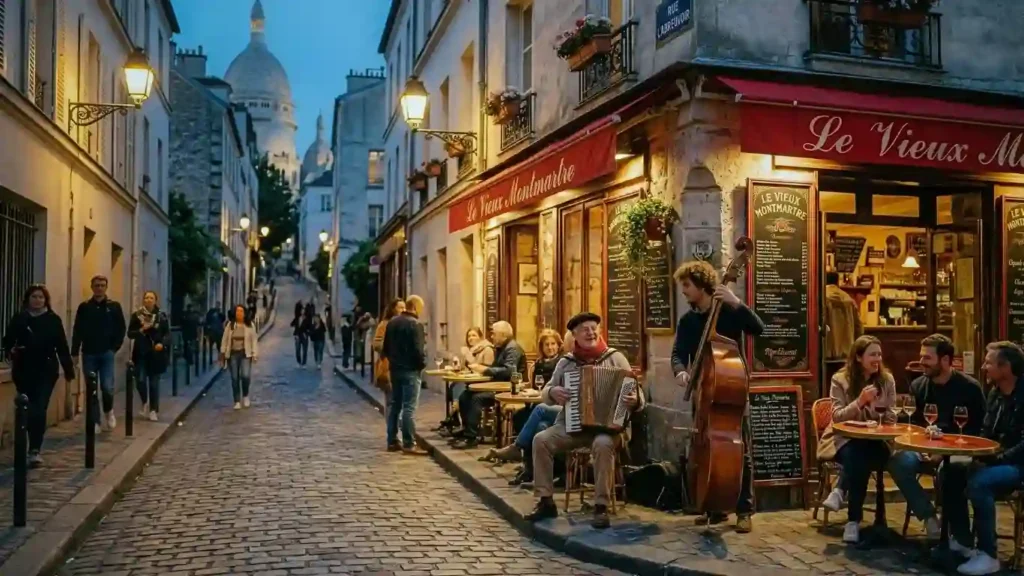
If you wander up the hills towards the Sacré-Cœur Basilica, you’ll find the Paris of the artists. Montmartre has breathed art since the days of Van Gogh and Picasso. During the festival, the neighbourhood draws in plenty of folk musicians, acoustic jazz, and the traditional “chanson française”.
It’s the perfect setting for couples or solo travellers looking for a more romantic atmosphere. Sitting on the basilica’s steps, listening to a classical guitar whilst taking in a panoramic view of the whole of Paris lit up, is a truly priceless experience.
- Quartier Latin: Student Energy and Rock
Home to the famous Sorbonne University, the Quartier Latin (Latin Quarter) is brimming with young students from all over the globe. Consequently, the energy here is high and incredibly vibrant. This is paradise for anyone who loves Rock, Indie, Punk, and garage bands packed with attitude.
The area’s Irish pubs and bars usually throw their doors open and have bands playing facing out onto the pavement. The pints flow freely, and people belt out the choruses with their arms around each other. If you’re missing the buzz of a proper rock gig, this is your spot.
- The Banks of the River Seine: The Unbeatable Classic
If it’s your first time in the city, strolling along the banks of the River Seine is pretty much mandatory. The promenade that lines the river turns into an eclectic parade of talent. You can grab a crêpe or a baguette sandwich, sit by the water’s edge, and watch the performances.
The perk of the Seine is that the space is wider and much breezier. It’s brilliant for those travelling with family who want to dodge the overly cramped streets. Plus, the acoustics of the sound bouncing off the water and the stone bridges create a marvellous audio effect. Be sure to check out the blog’s comprehensive tips on the best tours and itineraries around the River Seine to round off your day.
What Music Genres Are Played at the Party?
One of the questions I get asked the most is: “But what do they actually play?”. The simplest answer is: absolutely everything. Diversity is the very beating heart of the event. Nobody is left out of this massive democratic celebration.
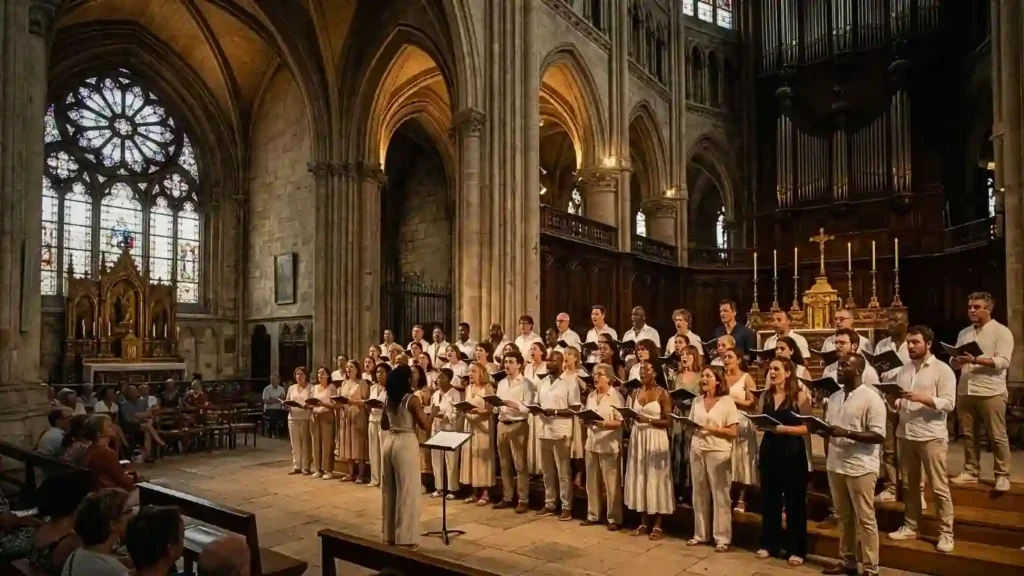
If you’re into classical music, prepare for a moving surprise. Several historic churches open their doors to host choirs and chamber orchestras. And here’s a rather impressive detail: the choirs at the Fête de la Musique in Paris perform varied repertoires ranging from classical and gospel to modern takes on French tunes.
Golden Tip: Stepping into a centuries-old Gothic church, with its flawless acoustics, to hear a 50-voice choir singing a cappella gives you literal goosebumps. It’s a colossal contrast to the cheerful racket going on outside.
For fans of world music, there are stages dedicated to African music, Caribbean rhythms, and even samba and forró. Yes, the Brazilian community in Paris always makes an appearance and organises incredibly lively samba circles that have the French attempting a few dance steps.
And of course, lovers of heavy beats will find their groove. Electronic music has been gaining more and more traction, with makeshift raves in squares where the youth jump around until the early hours of the morning.
What Most People Don’t Know
What most folks don’t know is that the massive, rigged stages, like the one at Place de la République, are usually broadcast on TV and attract suffocating crowds.
If you want a bit of comfort and a genuinely authentic experience, steer clear of the main stages advertised in the big papers. The true soul of the Fête de la Musique lives in the smaller gatherings. It lives in the violinist busking at the metro station entrance and the jazz band squeezing onto a first-floor flat’s balcony.
Another detail rarely mentioned: the museums. Many travellers focus solely on the streets, but some of the city’s major cultural spaces take an active part in the festivities. The courtyards of certain iconic museums occasionally host string quartets or exclusive, free dance performances.
It’s actually well worth having a gander at the French Ministry of Culture’s official programme a few days before your trip to check which institutions will be opening their gardens.
Practical Tip: Strategic Itinerary for the 21st
If I could map out the perfect day for a traveller, it would look a bit like this. Wake up early and do your usual sightseeing, like visiting the Eiffel Tower or doing a full tour of the Musée d’Orsay in Paris. The party only truly warms up in the late afternoon, so your morning is free.
Around 3 pm, take a strategic break. Head back to your hotel, have a refreshing shower, rest your legs, and change your clothes. Remember that the event goes on until the early hours? You’re going to need that saved-up energy.
Head out again closer to 5 pm. Start in a quieter neighbourhood, like the islands on the Seine (Île de la Cité or Île Saint-Louis), and slowly make your way up towards the livelier districts as the evening progresses. It’s the best way to transition smoothly and not burn yourself out straight away with the massive crowds.
What to Bring and What to Wear?
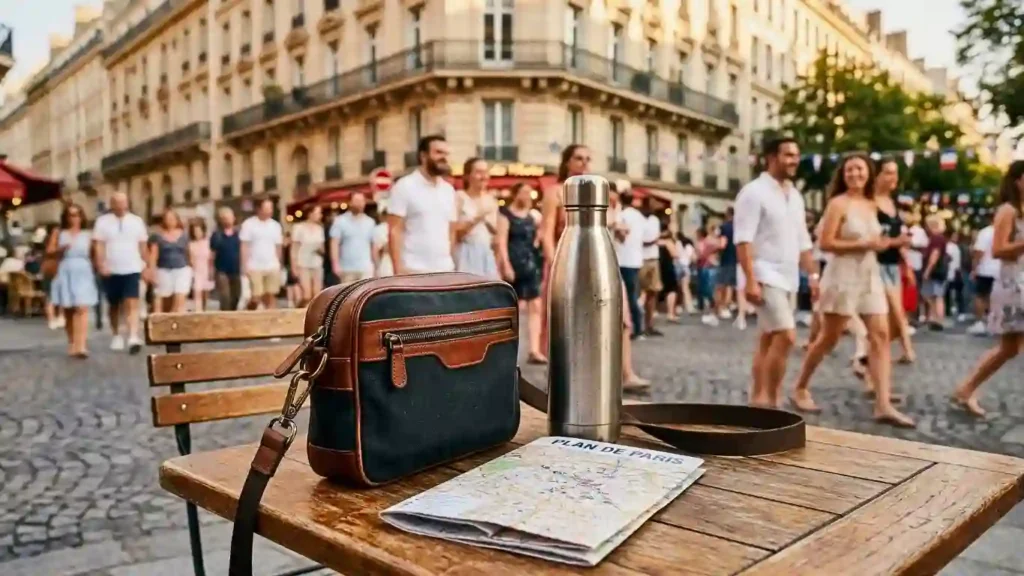
Comfort is the name of the game. The European summer tends to be pretty hot during the day, but the temperature can drop a fair bit in the early hours. Here’s a basic survival checklist for the festival:
Footwear: Supremely comfortable trainers. Forget heels, tight boots, or brand-new shoes. You’re going to be walking for miles on tarmac and cobblestones.
Bag/Rucksack: Use a money belt or a small cross-body bag, always positioned at the front of your body. As with any event drawing massive crowds in touristy cities, pickpockets thrive on people being distracted.
Hydration: Bring a reusable water bottle. Paris has several free drinking water fountains (the famous Fontaines Wallace) dotted around the city where you can top up.
Light Layer: A thin cardigan or a denim jacket tied around your waist for when the wind blows a bit colder in the early hours.
Transport and Food During the Festival
A crucial point for the success of your night out is knowing how to get about. Public transport in Paris (run by the RATP) usually puts on a special service for the Fête de la Musique.
Many metro lines, especially the main ones crossing the city, run all night or at least much later than usual (generally until around 2 am). Furthermore, they often sell a special, discounted ticket for unlimited travel during the night of the event.
However, avoid the central stations that intersect with the biggest stages, as they can sometimes be shut down for security reasons due to overcrowding. The best strategy is to hop off a stop or two before your final destination and walk the rest of the way.
Where to Eat Without Wasting Time?
The classic sit-down restaurants will be absolutely rammed, and, honestly, you won’t want to waste two hours sitting around waiting for your grub to arrive whilst the party carries on outside.
Take the opportunity to dive into Parisian street food. Grab freshly made crêpes from little stalls scattered across the squares, tuck into a falafel sandwich in the Marais district, or simply buy a traditional baguette and some cheeses from the supermarket earlier in the day and have a picnic on the pavements. It’s practical, cheap, and brilliantly tasty.
If you’re planning to extend your trip through France and explore other regions, or even catch the train to visit Disneyland Paris, try to leave those further-out excursions for the 22nd or 23rd of June. The 21st truly deserves to be lived exclusively in the heart of the capital.
Is It Worth Including in Your Itinerary?
If you have the flexibility to choose the dates for your European getaway, I’d say popping the 21st of June on your calendar is one of the smartest decisions you can make. The Fête de la Musique isn’t just a musical event; it’s a deep cultural immersion into the French way of life.
You’ll see the city through the eyes of a local. You’ll have a laugh, you’ll be moved by an instrumental piece played by the riverside, and you’ll feel the vibration of the historic streets pulsing to a party rhythm. Just remember to go with an open heart and mind, wearing comfy shoes and a willingness to explore.
It’s the sort of experience that turns a simple holiday into a cracking great story to tell when you get back home.
Value Summary for the Traveller: The Fête de la Musique in Paris always takes place on the 21st of June, marking the summer solstice. It’s the city’s biggest free festival, where musicians of all genres take over streets, squares, and churches from 4 pm right through to the early hours. Chuck on some comfy clothes, wander without a fixed itinerary through neighbourhoods like the Marais and Montmartre, and make the most of the vibrant local street food.
And what about you, what style of music would you love to randomly stumble across turning a corner in Paris? Let me know in the comments, I’d absolutely love to hear what your perfect soundtrack would be!
Read about
Architecture in Paris: A Walking Tour to Discover the City of Light