
It’s raining. A fine, needle-like drizzle, the sort that seeps straight into your bones and completely fogs up your phone’s camera lens. You are standing in the vast courtyard of the Louvre, exactly at 08:45 on a damp Tuesday morning. Your feet are already beginning to throb inside the Chelsea boots you swore to yourself were comfortable enough for a European holiday. Directly in front of you, a snake-like queue wraps entirely around the gigantic glass Pyramid, shivering in unison. Just to your left, an American tourist is discovering, rather loudly, that the shiny QR code saved on his iPhone is completely useless. He forgot to reserve his entry time.
The turnstile emits a sharp beep. A flashing red light. Access denied.
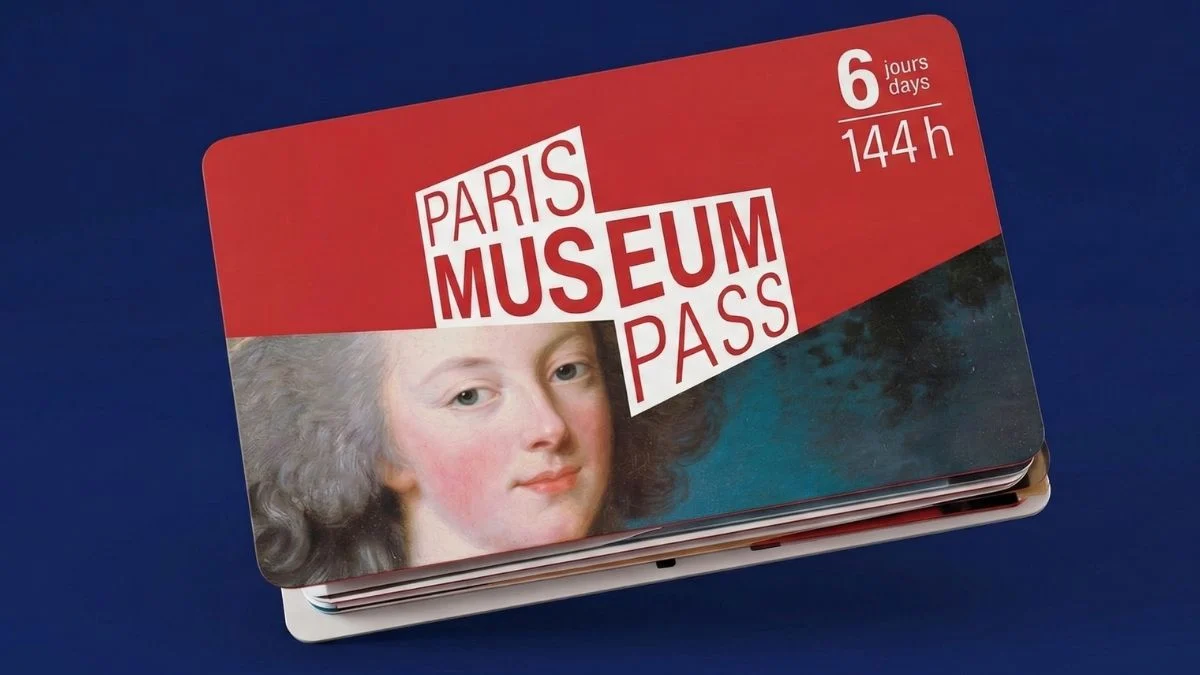
The 144-hour pass is undeniably the smartest choice for anyone wanting to explore Paris economically without wasting half their holiday loitering in queues.
The entire internet will eagerly tell you that buying the Paris Museum Pass is the most obvious decision of your life. “Skip the queues!” they shout enthusiastically in fast-paced Instagram reels. “Save dozens of euros!”. Yet, the gritty truth that nobody mentions in those highly polished travel guides is that the pass, today, is a double-edged sword. It demands military precision.
If you do not master the hidden rules of this digital card, it will instantly transform into the most expensive, utterly useless PDF file of your entire trip. I am going to open the black box. No sugar-coating, just the updated prices, the raw reality, and the actual dirt on the cobblestone streets.
The Radar: What Has Changed (The Reality of Paris Today)
Forget the outdated YouTube tutorials recorded before 2024. Post-Olympics Paris is a relentless, highly calibrated crowd-control machine.
There used to be a time when you bought the little red paper booklet of the Paris Museum Pass at a charming newsstand by the River Seine. You would tuck it into your wool coat pocket, strolling into museums and simply flashing the cover at the guards with a confident, knowing nod. That romantic, carefree era is completely dead.
The 100% Digital Pass and the Dictatorship of the Mobile Phone
Today, the transaction is totally sterile and entirely digital. You buy the pass online, receive a file, add it to your digital wallet (Apple or Google Wallet), and you are supposedly ready to go. But right here lies the first physical trap: battery life.
The biting Parisian cold drains lithium-ion batteries with terrifying speed. If your phone dies at 16:00 after you have filmed 50 stories marvelling at the stained glass in the Sainte-Chapelle, your cultural immersion is abruptly over. Walking around with a heavy-duty power bank is no longer just a casual travel tip; it is an absolute survival requirement. You will feel the icy wind biting your fingers as you desperately try to keep your screen bright enough for the barcode scanner to read it.
Mandatory Booking
Owning the pass does not guarantee your entry. Repeat this sentence out loud until you internalise it. Having the pass only guarantees that you do not have to pay the entry fee.
Absolute titans like the Louvre, Sainte-Chapelle, Musée de l’Orangerie, and the Palace of Versailles have enforced the draconian rule of the time slot (agendamento obrigatório). You must navigate to the official website of each attraction—yes, individually, one by one—locate the obscure “I have a Paris Museum Pass” option, and secure your specific slot. The actual booking process is free.
The catch? Availability. For the Louvre, during high-season months from May to September, the free slots for pass holders vanish 30 to 40 days in advance. If you leave this crucial decision to the night before, your screen will display a depressing wall of greyed-out dates. You will be left clutching a pass worth nearly 100 euros, staring at the Mona Lisa solely through Google Images.
To consult the ever-updating list of institutions requiring a reservation, you must strictly check the official portals or the site, Paris Je t’aime, the city’s official tourism board.
This is the exact detail that ruins the holidays of countless clueless travellers. Having the pass no longer means you can turn up at the front door, lazily show your phone screen, and waltz in like a celebrity.
Following the strict protocols established over the last few years, massive institutions now demand that you lock in a specific time. To book these visits using your Paris Museum Pass (PMP), you have to go through the https://www.parismuseumpass.fr/en/reservation .
There is no magical, unified booking system covering all attractions. Instead, this page acts as a central hub, providing links to the individual reservation systems of every museum or monument that requires a set time.
The process of booking your slot is technically free for pass holders. The trap is purely about availability. If you wait until the eve of your visit to book the Louvre, there will simply be zero spots left.
Book your slots at least a full month before your flight so you do not end up weeping outside the glass pyramid.
The Dark Side: Hidden Costs and the “Garden Tax”
Naivety is severely punished in euros. Let us dissect exactly where the leaks happen.
The Illusion of the Eiffel Tower
It is staggering how many tourists buy this pass assuming it magically opens the lift doors to the Eiffel Tower. It absolutely does not. The most iconic iron structure on the planet is managed by a completely different private entity. Furthermore, the pass grants zero access to the Paris Catacombs, is utterly useless at the Opéra Garnier, and keeps you far away from the Bateau Mouche river cruises. It is strictly aimed at national historical heritage.
Incidentally, if your Parisian agenda leans more towards pop culture than classical art, be aware that the pass holds no value whatsoever at Disneyland Paris. That requires entirely separate tickets and a totally different logistical nightmare.
The Musical Gardens
This is the sneaky trip-up that hurts the wallet the most. The Paris Museum Pass successfully covers your entry into the Palace of Versailles (including the King’s State Apartments and the Trianon). However, from April to October, on specific days (usually Tuesdays, weekends, and bank holidays), Versailles turns on the spectacular water fountains accompanied by blaring classical music. They brand this Les Grandes Eaux Musicales.
Guess what? Your pass explicitly does not cover access to the gardens on these specific days. You walk up to the massive glass doors leading out to the sprawling greenery. The security guard shakes his head, points to a makeshift ticket booth, and demands an extra 10 to 12 euros just for the privilege of stepping onto the gravel. The sheer scale of the Hall of Mirrors, with its 357 mirrors reflecting the manicured gardens outside, is designed to make you feel tiny—a psychological trick engineered by King Louis XIV. But being charged extra just to see the fountains ruins the royal fantasy quite quickly.
Transport is not included
The pass is not a Metro ticket. To navigate the vast, underground labyrinth that distinctly smells of burnt bread, friction, and old railways, you must purchase a Navigo Pass or individual tickets (the Tickets t+) from the RATP machines, the official transport authority.
The Cold Mathematics: Penny by Penny
Enough opinions. Let us look at the raw, unforgiving numbers of 2026. Exchange rates leave no room for error. The options are:
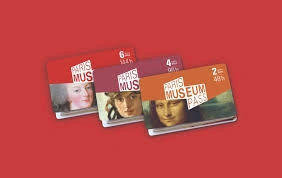
- The 48-Hour Pass (Approximately 62 €)
- Perfect for the “marathon runner” profile or those with very limited time in the city. It strictly demands that you complete at least two major attractions per day just to break even. It is intensely rushed, but it remains the top choice for those who want to hit the basics hard and then spend the rest of their trip relaxing in cafes.
- The 96-Hour Pass (Approximately 77 €)
- By an absolute mile, this is the best value for money. Four full days give you the necessary margin to actually breathe. You can conquer the Louvre comfortably in the morning, wander aimlessly in the afternoon without any rigid commitments, and then tackle Versailles the following day. This is the pass I strongly recommend for anyone spending a week in Paris.
- The 144-Hour Pass (Approximately 92 €)
- This is the holy grail for genuine art and history aficionados. If your absolute idea of happiness involves spending hours inspecting the thick layers of oil paint on a Van Gogh canvas, or reading every single informational plaque, this pass is built for you. It offers a generous window of time for those who do not just want to “see” the works, but rather study and feel them without the ticking clock causing anxiety. It allows you to dilute your visits over nearly an entire week.
The maths: is it worth it for your profile? (Avoiding the loss)
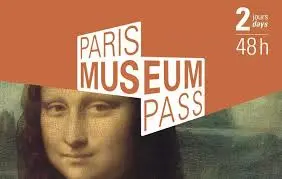
Let us do the maths with the cold calculation of someone who respects every hard-earned euro. Currently, the entry-level version (48 hours) costs roughly 62 euros.
To understand how this plays out on the ground, look at this quick cost spreadsheet. This simulates a visit to the absolute heavyweights of Paris, assuming you had to pay for each ticket separately at the official box office:
Attractions included in the Paris Museum Pass: where the pass truly shines
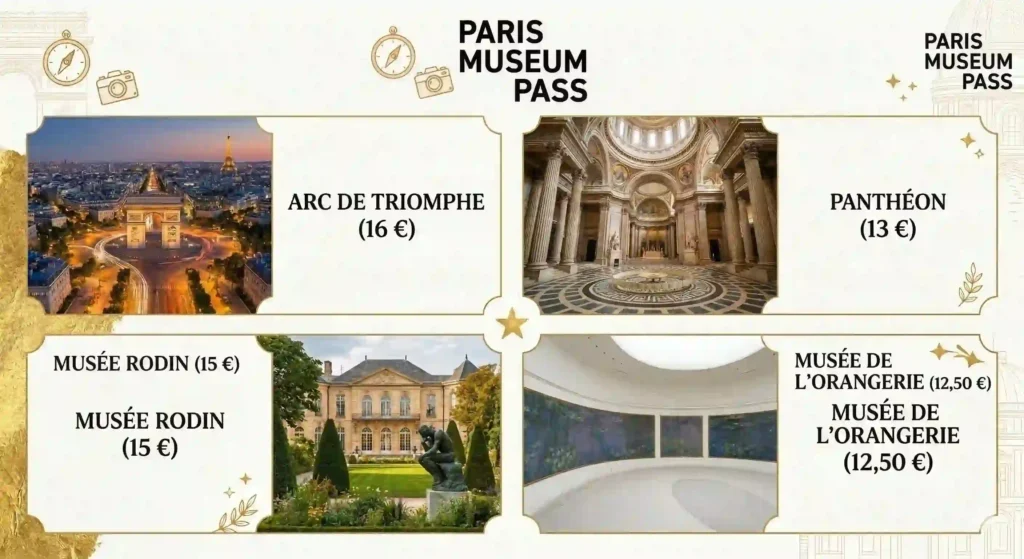
An overview of 4 incredibly popular attractions included in the Paris Museum Pass alongside their individual entry costs.
Funneling all your energy solely into the Louvre is the biggest rookie mistake you can make. Swapping the utterly predictable itinerary for the much quieter impressionist wings, or experiencing the sharp morning light slicing through the centuries-old stained glass of the Sainte-Chapelle, completely alters your perception of the city. Anyone who has discovered the knows the outside perspective is magnificent, but the sheer list of places covered by this pass is jaw-dropping:
- Palace of Versailles: The pass grants you entry to the Sun King’s royal apartments and Marie Antoinette’s estate (Grand and Petit Trianon). A highly practical warning: from April to October, on the days the Musical Fountains Shows run, access to the gardens is charged entirely separately, and your pass will not cover this garden tax.
- Arc de Triomphe: There are 284 dizzying, spiral steps to climb. The wind at the top is notorious for ruining hairstyles, but standing right up there in the late afternoon to watch the Champs-Élysées illuminate is a mandatory life experience. With the pass, you march straight into the queue for the stairs.
- Pantheon: A live history lesson planted right in the heart of the Latin Quarter. Watching Foucault’s Pendulum swing rhythmically in the centre of the massive dome is deeply hypnotic.
- Pompidou Centre: An absolute paradise for contemporary art (with all its industrial pipes brazenly exposed on the exterior) and boasting one of the greatest free panoramic views of the city from the top floor.
- Musée de l’Orangerie: The quiet, permanent home of Monet’s massive water lilies, housed in spectacular oval rooms. It sits at the very edge of the Tuileries Garden and offers an infinitely calmer atmosphere than the chaotic Louvre next door.
Scenarios:
Theory looks beautiful on paper. But what happens when the real Paris hits you hard?
If there is a Metro Strike (Grève)… The Scenario: You wake up, drink your espresso (which inexplicably cost you 4.50 euros), and discover that metro lines 1 and 4 are completely paralysed. Your 48-hour pass is already ticking down. The Solution: Abandon your widely spread geographical itinerary instantly. Stick to a single zone. Head straight for the Marais. Use the pass at the Pompidou Centre (stay for hours, the view from the 6th floor is staggering), walk down to the Musée Picasso, and then the Musée des Arts et Métiers. Save the precious hours you would waste in chaotic, striking traffic by grouping museums hyper-concentrated in the same arrondissement.
If it rains torrentially on your Versailles day… The Scenario: You had meticulously planned Versailles, but the sky is aggressively falling. Trudging through muddy gardens with the freezing wind whipping your face is absolute misery. The Solution: Do not activate the pass for Versailles on this miserable day (pay out of pocket later if you must). Pivot your entire strategy to indoor, massive galleries. Seek refuge in the Louvre (you can easily burn 8 hours inside without seeing daylight) or dive into the Musée de l’Armée (Les Invalides), which features gigantic internal pavilions housing Napoleon’s imposing tomb.
If you miss your booked Time Slot… The Scenario: You booked the Louvre for 10:00 precisely, but you took a wrong turn at the Palais Royal station and rock up panting at 10:40. The Solution: French security guards are not globally renowned for their customer-service flexibility. Generally, there is an unofficial grace period of about 15 minutes. Beyond that, you are mercilessly banished to the “late/no reservation” queue, which can easily swallow two hours of your life, or you are simply turned away. The golden rule? Arrive 30 minutes early. Stand on the pavement, buy an almond croissant from the corner bakery, and wait.
Want a visceral, visual sense of the absolute chaos of using the pass on the ground? The brilliant channel Les Frenchies ran an insane physical test, attempting to hit 8 museums in just 48 hours using the Museum Pass. They show you exactly what the priority queues actually look like in reality. Turn on the subtitles via the gear icon in the video below and watch their genuine struggles as they sprint across the capital.
Kamikaze Itinerary: How to use 48h without having a heart attack
To guarantee you do not flush your euros down the drain, I have constructed a high-efficiency battle plan for anyone brave enough to use the 48-hour version. The golden rule here is non-negotiable: group the monuments strictly by geographical zones. Do not traverse the city three times in one day via the metro; the travel time will cannibalise the validity of your card.
Day 1: The Central Axis of History
- 09:00: Start your morning at the Sainte-Chapelle (booking mandatory). The way the early light fractures through the stained glass is staggering. It is located on the Île de la Cité.
- 10:30: Walk exactly two minutes and enter the Conciergerie, the chilling prison where Marie Antoinette was held just before she faced the guillotine. You can still feel the damp chill in the stone.
- 14:00: Cross the river and face the beast: the Louvre Museum (booking mandatory). Golden tip: absolutely do not enter through the main glass Pyramid. Use the underground entrance via the Carrousel du Louvre (accessible from the Palais Royal – Musée du Louvre metro shopping gallery). The security queue down there is incredibly fast.
- 19:00: If you somehow still have feeling in your legs, ride the escalators up to the top floor of the Pompidou Centre to watch the Parisian skyline go dark. They keep their doors open later than the others.
Day 2: Art, Military, and Heights
- 09:30: Head straight for the Musée d’Orsay. Ignore the ground floor initially; ride straight up to the fifth floor to see the giant transparent clock and the heavy-hitting impressionists before the massive tour groups arrive, then slowly work your way down. The smell of old wood and the echoing acoustics of the former railway station add a completely unique texture to the experience.
- 13:30: Walk over to the Rodin Museum, just a short distance away. The sprawling gardens filled with bronze sculptures (including The Thinker) provide the perfect, quiet sanctuary to sit down and rest your feet.
- 15:30: Right next to Rodin sits Les Invalides (The Army Museum). Walk inside to stand under the massive golden dome and stare down at the monumental, intimidating tomb of Napoleon Bonaparte.
- 18:00: Jump on the metro and exhaust the final hours of your pass by climbing the Arc de Triomphe, timing it perfectly to catch the Eiffel Tower sparking into life on the horizon.
Logistical warning: Paris does not operate in unison. The Louvre and the Pompidou aggressively lock their doors on Tuesdays. Meanwhile, the Musée d’Orsay and Versailles are completely shut on Mondays. Map out your itinerary by fiercely cross-referencing this information with the calendar.
The Unquestionable Verdict
The Paris Museum Pass is not really about saving money; it is entirely about buying flow.
If you travel with a slow, contemplative style, if your ultimate pleasure is sitting for three hours sipping a robust Bordeaux in a Montmartre bistro while watching locals aggressively swear at the traffic, run far away from this pass. It will morph into a relentless tyrant in your pocket, constantly making you feel guilty for not being trapped inside yet another dark, humid museum. Just pay the 20 euros at the door whenever you spontaneously feel like looking at something specific, and be happy.
However, if you have an insatiable thirst for history, if you suffer from severe architectural FOMO (Fear of Missing Out), and if your personality profile matches that of a methodical cultural explorer who builds colour-coded Excel spreadsheets… then yes. Buy the 96-hour version (undeniably the greatest value). Book every single one of your precise time slots thirty days before you even board your flight. Slide a thick gel insole into your walking shoes, and completely devour Paris.
The city holds absolutely no pity for the unprepared, but it hands the world over to those who know how to play its brutal games.
Author Alex Ferreira da Silva
If you liked this, you will love:

2 thoughts on “Paris Museum Pass: The Ultimate Dossier”