
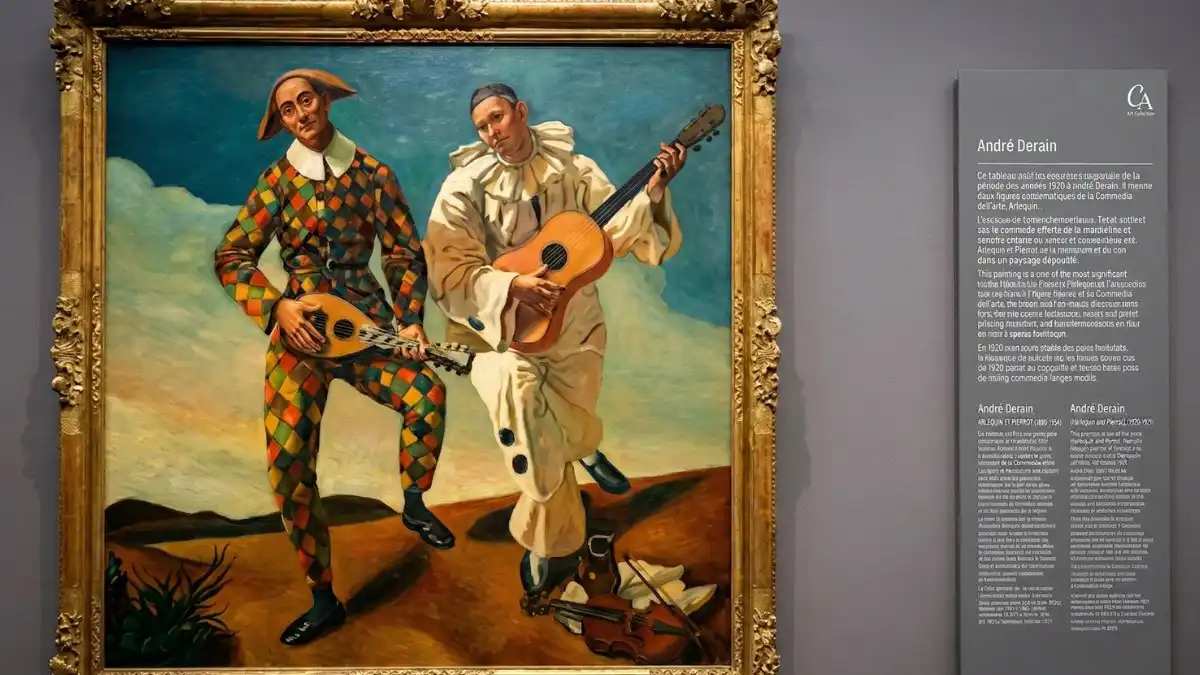
To be perfectly frank with you, there are certain moments during our travels that physically alter our heart rate. You know that precise second when the entire universe simply makes sense? You have just navigated the sweeping expanse of the Place de la Concorde. The crisp wind hits your face. The Parisian sky above displays that particular shade of grey—infinitely more grey than blue, so famously poetic—creating the ultimate theatrical backdrop for the surprises the City of Light keeps hidden. The day is beautiful on its own terms. The cold air carries an undeniable, electric energy. Something magnificent is about to happen.
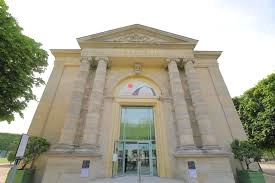
You step into the magnificent Tuileries Gardens.
The relentless roar of city traffic instantly dissolves, replaced by the satisfying, rhythmic crunch of your shoes against the white limestone gravel. And right there, sitting quietly facing the River Seine, acting almost like a silent guardian of aesthetics, rests a charming, welcoming stone building. Welcome to the Musée de l’Orangerie. It is, without a doubt, the warmest, most colour-saturated embrace in all of Paris.
While the vast majority of tourists run themselves into a state of exhaustion across the endless corridors of the Louvre just next door, those who genuinely seek a real, visceral, intimate connection with art walk in this direction. Believe me, I have dragged my suitcase across many continents, but the sheer atmospheric weight of this specific location is entirely different.
Do you want to know the best part?
The magic is not merely trapped within the heavy gold frames hanging on the walls. It is suspended in the very essence of the air you breathe the moment you cross the threshold.
The Arrival: The Charm of the Path to the Museum
What most guidebooks fail to mention is that the actual journey to the l’Orangerie begins long before you hand over your ticket to the attendant.
The slow walk through the Tuileries Gardens is an absolute spectacle in its own right, originally designed by Catherine de’ Medici in the 16th century and later reimagined by André Le Nôtre. You stroll past perfectly symmetrical, serene fountains where local Parisian children push tiny, vintage wooden sailing boats using long bamboo sticks. It is a scene so strikingly picturesque it feels ripped straight from a 1950s French cinema reel. Parisians possess an incredibly rare talent for treating their monumental public spaces as though they were merely extensions of their own private living rooms.
The smell hits you next. The rich, intoxicating scent of a piping hot crêpe melting around a generous spread of Nutella drifts over from the small, dark green kiosks near the entrance gates.
I always tell my readers to stop for a minute right there. Buy a crêpe from a local vendor. Listen to the melodic, sharp cadence of their French accent, accept their quick, sincere smile, and just stand there observing life as it unfolds. It is the small, independent merchant who gently reminds us how welcoming France can be when we approach it with an open heart and a bit of patience.
Arriving at the museum doors in this relaxed state of mind changes the entire trajectory of your day. You are no longer just ticking a box on a rigid tourist itinerary. You are, quite simply, living Paris.
The Magic of the Architecture: Monet’s Embrace
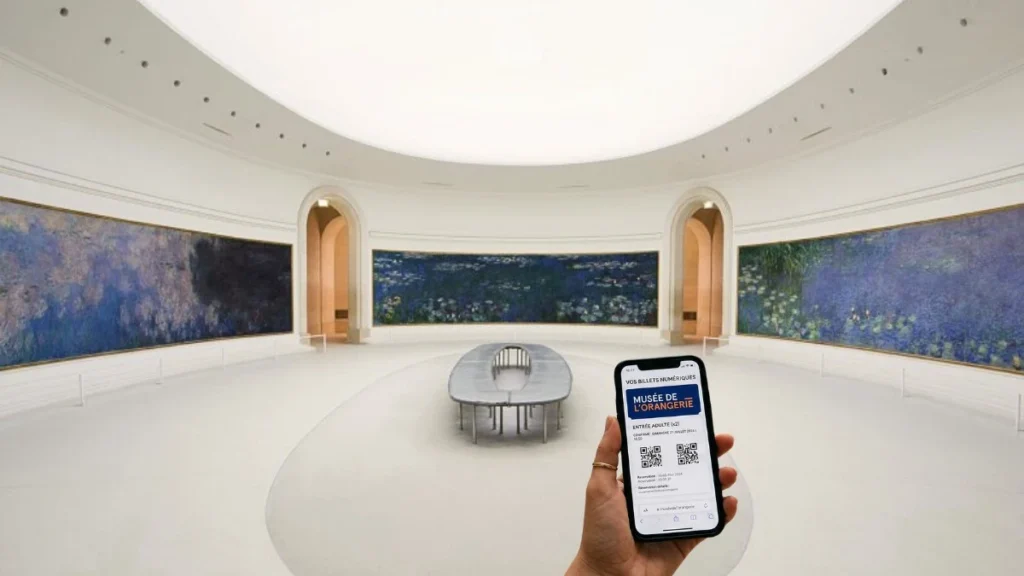
A wave of emotion hits you the exact second you pass through the security checks and step into the famous oval rooms on the ground floor. As someone who harbours a deep passion for interior design, the very first thing that knocked the wind out of me was not the paint on the canvas. It was the sheer genius of the spatial planning. The interior architecture of this museum is an absolute masterclass. These rooms are not just empty voids meant to hold objects; they are living, breathing frames.
Claude Monet did not just paint the monumental masterpieces that wrap around this space. He dreamt this exact room into existence.
Following the horrific devastation of the First World War, Monet offered these massive panels to the French state on Armistice Day in 1918 as a permanent symbol of peace. His one, non-negotiable demand? The rooms had to be constructed in the shape of the mathematical symbol for infinity. He worked closely with the architect Camille Lefèvre to completely gut this former 19th-century citrus greenhouse (built originally by Napoleon III to protect the Tuileries’ orange trees from the winter frost). The resulting curved, pristine white walls manipulate your senses, making you feel as though you are literally floating dead centre in the middle of his water lily pond in Giverny.
It is a feat of architectural engineering that reaches out and holds your soul.
The natural light provides the second act of this grand spectacle. Filtered incredibly softly through vast glass ceiling panels—engineered with surgical precision—the light constantly shifts in temperature and intensity as the Parisian clouds roll by outside. This dynamic lighting means the colours of the paintings—the bottomless cobalt blues, the vivid viridian greens, the delicate lilacs, and sudden touches of rose—literally come alive. They dance across the canvas depending on the hour of your visit. As someone who loves to grab a brush and paint occasionally, watching the thick texture of the oil paint chemically react to the shifting afternoon sun is staggering. You can physically feel the passion, the desperate hope, and the raw genius of the Impressionist movement vibrating through every single centimetre of woven canvas.
The Heart of the Museum: The Water Lilies (Les Nymphéas)
Standing exposed in front of the Water Lilies is an experience that defies the limits of the English vocabulary. You are looking at eight monumental compositions perfectly distributed across two vast rooms, oriented exactly on an east-to-west axis to follow the natural rising and setting of the sun.
In the first room, the colour palettes are deceivingly gentle. They heavily reference the breaking dawn, capturing the fragile, mirrored reflections of the surrounding trees resting on placid waters. It feels like the optimistic promise of a completely new day. Walk slowly into the second room, and the dramatic intensity skyrockets. The tones become deeply saturated, dark, and brooding, directly evoking the melancholic twilight and the drooping shadows of the weeping willows that lined his pond.
What shattered my heart, however, was the profound resilience hidden behind every single brushstroke.
Monet painted these gargantuan canvases at the absolute twilight of his life. He was not only suffering the mental anguish of the war tearing Europe apart just beyond his garden walls, but he was also rapidly, terrifyingly losing his own eyesight to aggressive cataracts. He could barely distinguish the colours on his palette. He was reading the labels on the paint tubes just to know what he was applying.
Yet, against all logical odds, he chose to paint the light. He chose to paint life itself. He left behind a permanent, massive visual diary proving that beauty will always resist, regardless of how dark and broken the world appears to be. It is a masterclass in stubborn optimism, rendered in thick oil paint.
That was the exact moment this building claimed my heart forever.
The Information Gain: The Secret Nobody Tells You
If you blindly follow the standard, mass-produced guidebooks, they will instruct you to walk to the dead centre of the oval room, stand perfectly still, and slowly rotate 360 degrees. Yes, it is a nice feeling. It is undeniably pretty.
But the real, transformative secret is this:
The absolute truth of Giverny reveals itself at the extreme edges. When you visit, walk forward. Get as close to the canvas as the tiny security ropes will legally allow (always keeping a respectful distance for the wonderful, hard-working museum staff, of course). Do not look at the water lilies. Look at the negative space between the brushstrokes.
Monet’s ultimate genius lives inside those seemingly chaotic, messy layers of pigment. Up close, the painting shatters. It looks like an abstract disaster of thick ‘impasto’ paint. It looks like the frantic mistakes of a human hand. You can see the trembling of his brush, the hairs of the bristle caught in the lead white paint. But then, you take three slow steps backward. Instantly, your brain corrects the chaos, and the illusion of rippling water reflecting the massive sky snaps perfectly into focus. Deconstructing the image by getting uncomfortably close, and then letting the magic rebuild itself as you retreat, is the single greatest visual exercise you can perform in this city.
If you are the type of traveller who is deeply obsessed with uncovering these hidden, granular details during your journeys, our editorial team has put together something brilliant. To plunge even deeper into the artistic marvels of the French capital, I highly recommend reading our comprehensive guide to the Museu D’Orsay (which remains my favourite museum in Paris).
The Basement Surprise: The Walter-Guillaume Collection
Far too many tourists walk out of the oval rooms, wipe away a quick tear of emotion, and head straight for the exit doors to find a taxi. Do not make this tragic, amateur mistake!
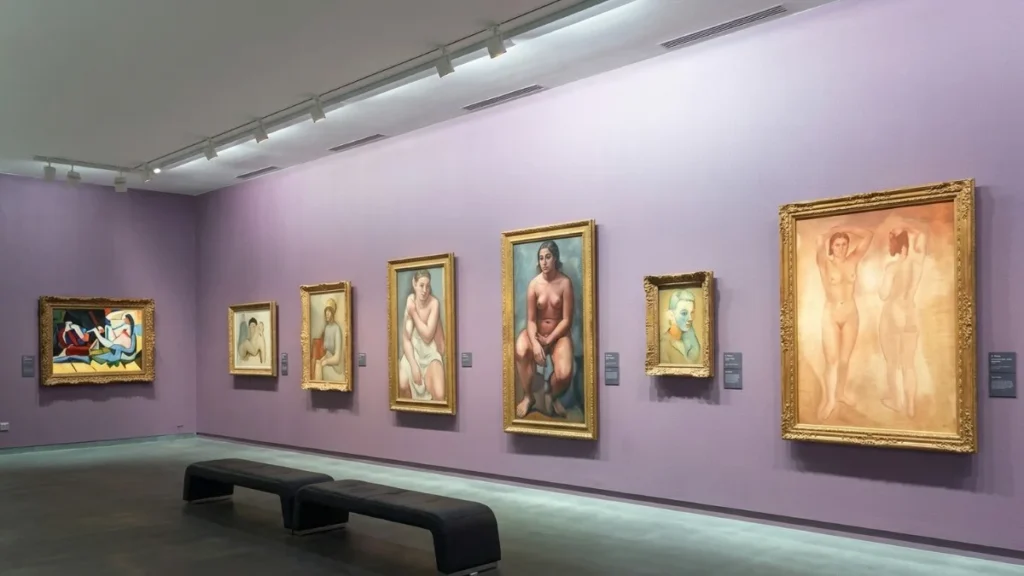
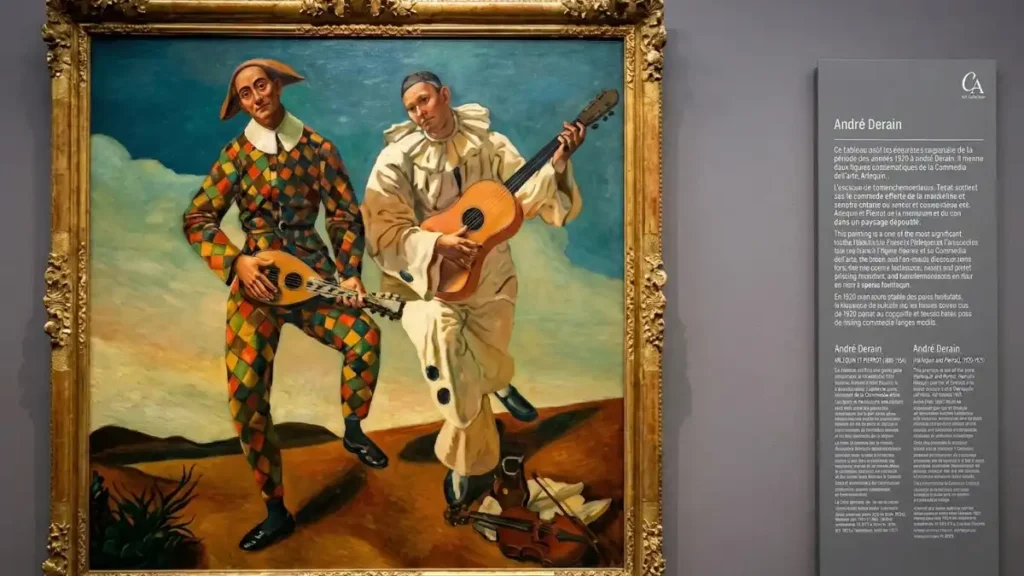
The lower ground floor of the Musée de l’Orangerie acts as a secure vault protecting the spectacular Jean Walter and Paul Guillaume Collection. It is, without exaggeration, a treasure chest of modern art history.
The atmosphere down here shifts dramatically. The rooms are quiet, slightly cooler, and offer a highly serene, uncrowded stroll through human brilliance. Paul Guillaume was a visionary young art dealer in the 1910s and 2020s. He championed the unknown misfits of Paris. After his early death, his formidable widow Domenica (who later married the wealthy architect Jean Walter) expanded the collection to create what you see today.
You will literally stumble, almost by accident, into vibrant works by Pierre-Auguste Renoir (featuring those unmistakable, glowing pink cheeks and his relentless celebration of youth). You will find the architectural, structured still-life apples of Paul Cézanne. You will stand face-to-face with the haunting, elongated necks and empty eyes of Amedeo Modigliani’s portraits. You will be hit by the explosions of shape and raw colour from Pablo Picasso and Henri Matisse.
It is a delicious journey.
You are entirely free to wander at your own designated pace, completely free from the suffocating pressure of the massive Louvre crowds. It is the ultimate moment to absorb exactly how these specific artists—the vast majority of them living in poverty, drinking cheap wine, and breathing the dirty air of the Parisian streets—fundamentally altered how the modern world perceives beauty. For anyone who adores cultural history and creative rebellion, this lower level is an absolute feast.
Golden Tips for a Flawless Visit (Zero Stress!)
Brilliant travel is always born from spontaneous moments, but it is sharp planning that actually buys you the time and the peace of mind to enjoy them. We have mapped out the ultimate shortcuts for you to completely dominate this visit:
The Golden Ticket of Happiness: This building is so universally adored that literally everyone wants a spot inside. To guarantee a smooth, triumphant entry, booking online with a specific, timed slot (horodaté) via the official website is your magic wand. Walk up to the entrance with the QR Code glowing brightly on your mobile screen. Flash a massive, genuine smile at the security attendant, deliver a loud, confident “Bonjour!”, and glide through the doors with the effortless grace of someone who actually knows how to travel properly.
The Sacred Hours: Force yourself out of bed and visit the museum the absolute second the doors unlock in the morning (exactly at 9:00 AM), or wait until the very end of the afternoon. The oblique angle of the sun washing over the stone facade and bleeding through the glass roof creates an intimate, moody atmosphere that is nothing short of spectacular.
Days of Glory and Budgeting: Do we have a secret for those travelling with a strict eye on their bank accounts? Of course we do. The institution throws its heavy doors open to the public completely free of charge on the first Sunday of every single month. Be warned: these free tickets vanish from the website with terrifying speed. Set an alarm on your phone and book weeks in advance. It is brilliant proof that elite, world-class art can, and absolutely must, be accessible to everyone.
The Coffee Break and the Charm of Local Commerce
Once your soul is thoroughly fed, your physical body will demand a treat.
The small, modern café tucked inside the museum is charming. The massive, floor-to-ceiling glass windows offer a stunning view, and the afternoon sun pours in, physically warming the sleek furniture. Order a steaming, bitter espresso and a beautifully layered, butter-heavy croissant that instantly shatters and melts the second it hits your tongue. Let the immense weight of the art you just witnessed slowly settle into your brain. It is the perfect excuse to pull out a small leather notebook, scribble down your raw feelings, or just quietly watch the other tourists wandering around in a state of shock.
If you prefer the gritty reality of the street, the immediate surrounding area is loaded with brilliant options. Walk swiftly down the legendary Rue de Rivoli and give your money to the small, independent boulangeries. The simple act of interacting with the local community—asking for a fresh baguette, trading a few quick complaints about the unpredictable rain—is the exact alchemy that transforms a generic holiday into a deeply powerful, permanent memory.
Radar on the Present: Accessibility and Sustainability
Paris is heavily upgrading its ancient infrastructure every single day. The Orangerie, acutely aware of its global importance, has executed fantastic, highly modern upgrades over the last few years. The smooth ramps and silent, glass elevators operate flawlessly, guaranteeing that wheelchair users, the elderly, and exhausted parents pushing prams have total, dignified, and comfortable access to absolutely every single painting.
This is what raw empathy looks like when translated into urban infrastructure!
Furthermore, physically getting to the front door is easier than it has ever been in history. The seamless integration with the underground Metro lines (specifically alighting at the massive Concorde station on Lines 1, 8, or 12) and the city-wide prioritisation of public transport highlights the city’s deep, structural respect for the environment and sustainable urban mobility. For accurate, real-time mobility updates, you should always consult the excellent digital dashboard of Paris je t’aime (The Paris Tourism Office), a globally respected authority that will save you hours of stress. And for the absolute art purists, the Musée de l’Orangerie’s own website is a masterpiece of clean digital navigation and deep historical archives.
The Itinerary Always in Your Favour
I constantly remind my readers that travel disasters are usually just brilliant adventures wearing a clever disguise.
What happens if you wake up and the Paris sky is throwing rain against your hotel window? Celebrate! The l’Orangerie is the ultimate, most cozy refuge in the entire city during a thunderstorm. The heavy drops rhythmically hammering against the massive glass roof above the Water Lilies provide an acoustic soundtrack that is impossible to replicate. It is extremely poetic.
What if your flight leaves soon and you are critically short on time? Do not panic. Skip the basement. Walk directly into the oval rooms. Find a tiny sliver of space on the circular grey bench sitting dead in the centre. Close your eyes tightly for exactly ten seconds. Take a massive, deep breath. Open your eyes and allow yourself to be instantly swallowed by that tidal wave of colour. Five minutes of total, visceral immersion is worth infinitely more than two hours of rushing around snapping blurry photographs on your phone.
The Visual Extension: Feel the Climate Before You Board
To properly accelerate your heart rate before your plane even leaves the tarmac, I strongly suggest diving into the aesthetic weight of this place from the comfort of your living room sofa.
Connect to YouTube, throw this onto your largest television screen, force the resolution up to 4K, and absorb the sheer scale of the achievement. You will instantly understand why this building matters.
To be completely honest with you, the Musée de l’Orangerie is a massive, deafening celebration of human survival. It is that highly specific, quiet corner of Paris that physically holds you during the freezing winter months, that injects you with inspiration when your daily routine feels suffocating, and that forces you to gasp with genuine joy simply because you are alive and hold the privilege of seeing the world through the battered, brilliant eyes of Claude Monet.
Human life is brutally short. It is far too short to deny ourselves the experience of interacting with real, earth-shattering art. So, throw on your most comfortable layers, lace up a pair of incredibly reliable walking shoes, fully charge your camera battery, and above everything else, pack an open mind. Paris is standing there, arms wide open, waiting for you to arrive.
Imagine yourself right now, slowly walking away from the absolute silence of the Water Lilies, and stepping directly into a journey that physically connects the beating, chaotic heart of Paris to the sweeping, dramatic coastal landscapes that birthed the entire Impressionist movement. You can capture that exact same rush of adrenaline by exploring our highly exclusive guide on the Centenary of Monet between Paris and Normandy, a meticulously engineered itinerary designed for those who demand to experience the absolute pinnacle of French culture and art. Do not let this visceral experience remain a pixelated dream on your phone screen; click that link right now and discover exactly how to morph your upcoming holiday into an unforgettable, living masterpiece! What on earth are you waiting for? Go pack your bags this second! Have a brilliant journey, and I will see you on the next adventure!